
4140 and 4340 are the two most widely used alloy steels in industrial manufacturing in Mexico. Both belong to the chromium-molybdenum (Cr-Mo) family, offer high strength and are machinable. However, they have important differences that determine which one is the better fit for a given application. Choosing wrong can mean an under-dimensioned part that fails — or unnecessary spending on more expensive material than the job requires.
What is chromium-molybdenum (Cr-Mo) alloy steel?
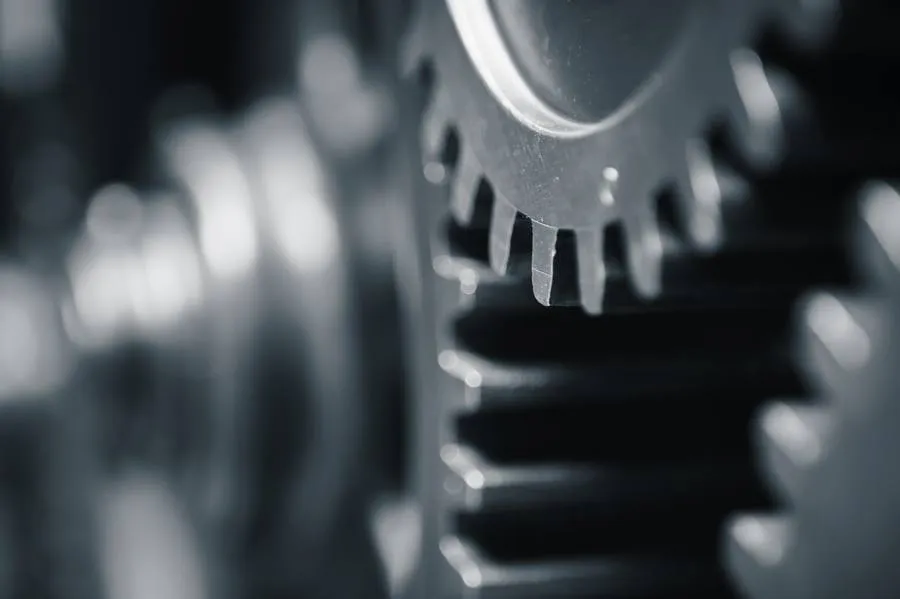 4140 steel gears machined to high precision
The 4000-series steels (AISI/SAE) are low-alloy steels containing chromium (Cr) and molybdenum (Mo) as their main alloying elements. Cr improves hardenability and oxidation resistance; Mo increases hot hardness and fatigue strength and reduces temper embrittlement.
Chemical composition of 4140 steel
- Carbon (C): 0.38–0.43%
- Chromium (Cr): 0.80–1.10%
- Molybdenum (Mo): 0.15–0.25%
- Manganese (Mn): 0.75–1.00%
- Silicon (Si): 0.15–0.35%
Composition of 4340 steel: the role of nickel
- Carbon (C): 0.38–0.43%
- Chromium (Cr): 0.70–0.90%
- Molybdenum (Mo): 0.20–0.30%
- Nickel (Ni): 1.65–2.00% ← key difference
- Manganese (Mn): 0.60–0.80%
Nickel is the differentiating element. It increases toughness, improves hardenability in large sections and makes the steel less susceptible to brittle fracture at low temperatures. 4140 contains no nickel.
Mechanical properties compared
| Property | 4140 steel (quenched & tempered) | 4340 steel (quenched & tempered) |
|---|---|---|
| Tensile strength (MPa) | 655–1000 | 760–1100 |
| Yield strength (MPa) | 415–830 | 470–1000 |
| Typical hardness (HRC) | 18–22 (normalized) / 48–54 (quenched) | 20–25 (normalized) / 50–58 (quenched) |
| Elongation (%) | 15–25 | 12–22 |
| Impact toughness (Charpy) | Good | Excellent |
| Hardenability (max. hardenable diameter) | ~60–75 mm | ~100–150 mm |
Machinability: which one performs better on CNC lathes and mills?
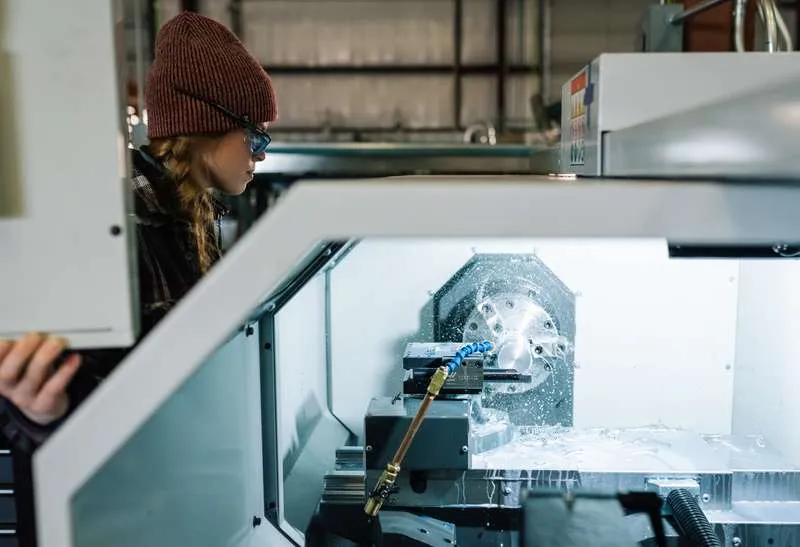 Machining a 4340 alloy steel shaft on a CNC lathe
How 4140 steel responds to machining
4140 steel in normalized or annealed condition has excellent machinability: it produces short chips, allows moderate-to-high cutting speeds and delivers a good surface finish. It is one of the most common steels in CNC machining shops in Mexico precisely because of this combination of mechanical properties and ease of machining.
Considerations for machining 4340
4340 steel is somewhat harder to machine than 4140 due to its higher alloy content and inherent hardness. It requires slightly lower cutting speeds, high-quality inserts and tighter control of the heat generated. The difference is not dramatic for a shop equipped with modern CNC machines, but it does show up in cycle time and tool wear, which impacts the cost of the part.
Heat treatment: quenching, tempering and normalizing
Achievable hardness with each steel
Both steels respond well to quench-and-temper heat treatment. 4140 can reach HRC 54–58 in small sections; 4340 reaches HRC 56–62 with greater consistency in large sections. The advantage of 4340 is that it maintains its hardness and properties at the core of thick parts (Ø > 75 mm), where 4140 tends to remain softer at the center due to lower hardenability.
How heat treatment affects material selection
If your part has a small cross-section (Ø ≤ 50 mm), quenched-and-tempered 4140 delivers the required properties at the lowest cost. If the part has a large cross-section, or if core properties are critical to structural integrity, 4340 is the right choice.
When to use 4140 and when to use 4340?
Shafts, axles and bolts: 4140 for most cases
The vast majority of shafts, drive shafts, pinions, high-strength bolts and industrial machinery components are made from 4140 steel. It is the workhorse of the industry: reasonable price, wide availability from Mexican distributors, good machinability and mechanical properties sufficient for 80% of industrial applications.
Critical parts where 4340 is justified
- High-power crankshafts and camshafts.
- Aircraft landing gear and defense components.
- Large-diameter main shafts for mills and crushers.
- Parts subjected to repeated impact loads and high fatigue.
- Components that must maintain properties throughout the profile (sections > 75 mm).
- Cryogenic or low-temperature applications where toughness is critical.
Rule of thumb: if your part is a standard drive shaft, use 4140. If it is a critical component whose failure could cause an accident or catastrophic equipment loss, or if it has a thick cross-section, consider 4340. The extra material cost is amortized against the cost of the risk.
4140 and 4340 steel in Mexican industry
In the sugar industry, mill shafts and conveyor drive shafts are typically made from quenched 4140. The most heavily loaded mill rollers may require 4340. In petrochemicals, rotating parts for compressors and high-pressure pumps are usually specified in 4340. In general manufacturing and agro-industrial machinery, 4140 dominates by a wide margin.
Availability in Mexico is good for both in round and square bar; 4340 may involve longer lead times depending on the profile and the region.
Frequently asked questions about 4140 and 4340 steel
What is the difference between 4140 and 4340 steel?
4340 contains nickel (1.65–2.00%), which 4140 does not. This gives it higher toughness, better hardenability in thick sections and greater fatigue resistance, in exchange for higher cost and lower machinability.
What is 4140 steel used for?
It is the general-purpose steel for machinery parts: shafts, axles, pinions, high-strength bolts. It offers a good balance of mechanical properties, machinability and cost.
Is 4340 steel more expensive than 4140?
Yes, between 20% and 40% more expensive. It is justified in critical applications where failure would have serious consequences, or where hardenability in thick sections (> 75 mm) is required.