
An unplanned production shutdown in a Mexican industrial plant can cost anywhere from tens to hundreds of thousands of pesos per hour: idle labor, wasted materials, contractual penalties and secondary equipment damage. The vast majority of these shutdowns are preventable. The difference between a plant that operates reliably and one that constantly fights fires is, to a large extent, its maintenance strategy.
What is industrial preventive maintenance?
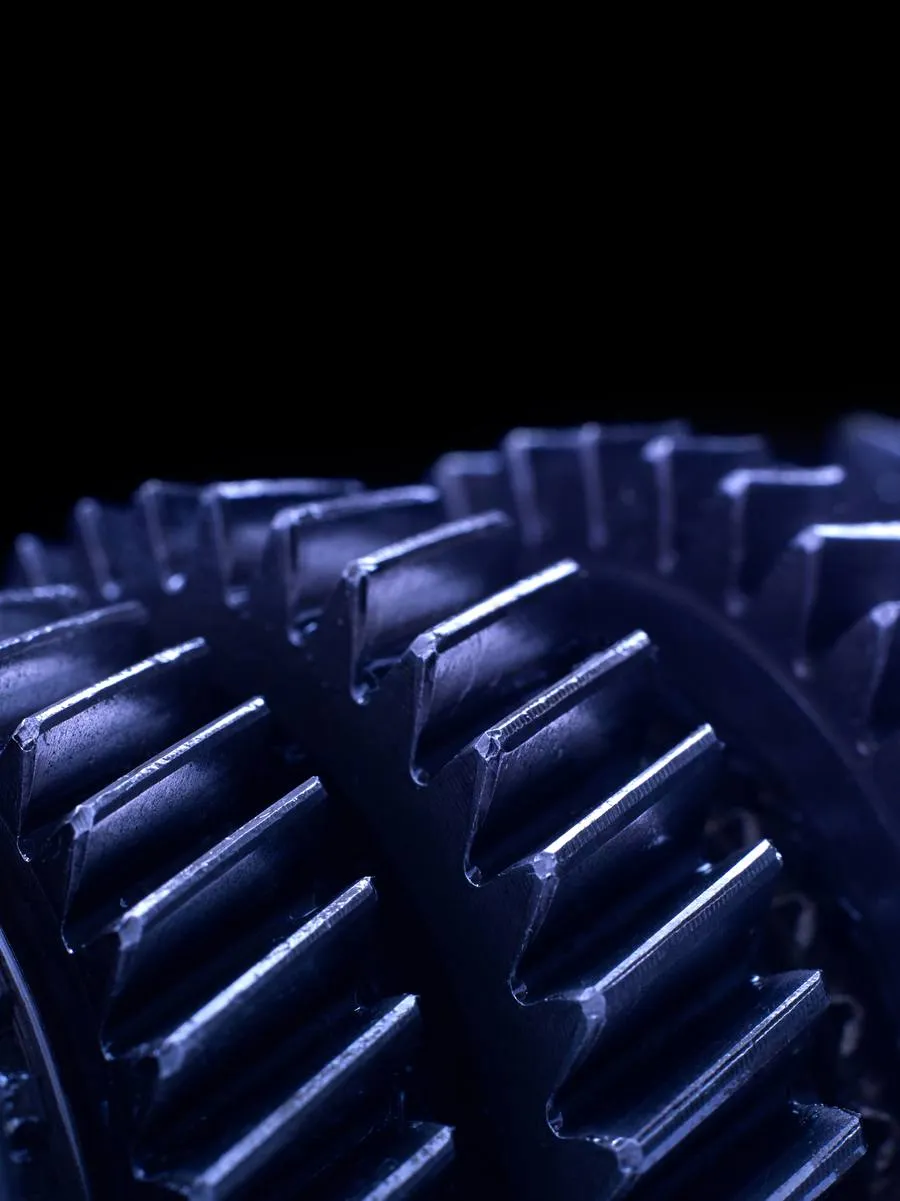 Industrial speed reducer during preventive maintenance work
Preventive maintenance is the set of scheduled actions performed on equipment and installations before failure occurs, with the goal of maintaining operational reliability and extending the useful life of assets.
Unlike corrective maintenance (which reacts to failure), preventive maintenance acts proactively: periodic lubrication, replacement of worn parts, alignment adjustments, cleaning, verification of operating parameters.
Difference from predictive maintenance
Predictive maintenance goes one step further: it uses sensors and instrumentation (vibration, temperature, oil analysis, ultrasound) to monitor equipment condition in real time and intervene only when data indicates degradation. It’s the most efficient, but requires higher investment in measurement equipment. For most industrial plants in Mexico, a good preventive maintenance program is the realistic starting point before considering predictive approaches.
What is corrective maintenance and when is it unavoidable?
Planned corrective vs. emergency maintenance
Not all corrective maintenance is bad. Planned corrective maintenance consists of repairing equipment that has already failed but whose failure doesn’t impact immediate production or safety: the repair is scheduled for a convenient maintenance window. This is valid and economical for low-criticality equipment.
The real problem is emergency corrective maintenance: failure occurs during production, requires immediate response, generates unplanned downtime, and often forces improvisation with parts not in inventory. This scenario multiplies costs 3 to 5 times compared to equivalent preventive maintenance.
Hidden costs of reactive maintenance
- Overtime hours for emergency maintenance personnel
- Urgent purchase of replacement parts (premium price for expedited delivery and shipping)
- Lost production during shutdown
- Secondary damage to adjacent equipment or processes
- Penalties from customers for delivery failures
- Accelerated wear: equipment that fails due to lack of lubrication can damage expensive components that were not originally affected
Economic impact: How to save up to 40%?
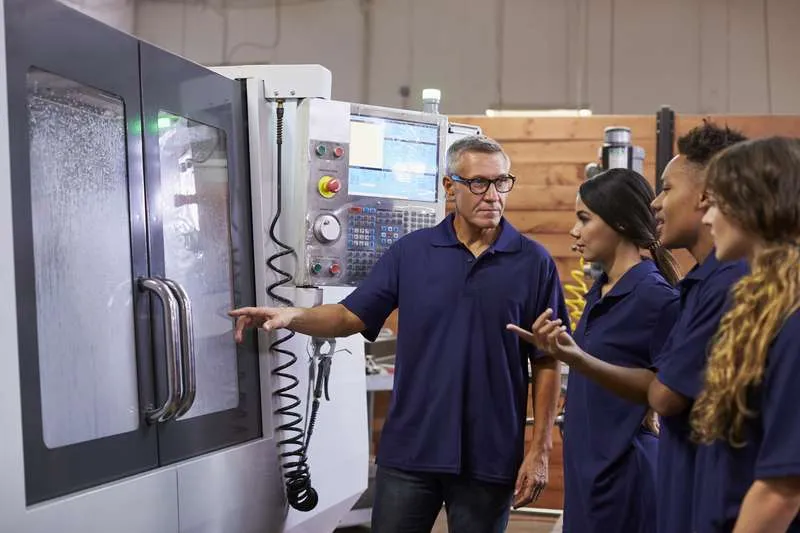 Specialized technicians performing maintenance in industrial plant
Calculating the cost of an unplanned shutdown
The cost of a production shutdown includes: (a) cost of unproductive labor, (b) lost production margin, (c) emergency repair costs, (d) indirect costs (logistics, crisis management, customer impact). In continuous-process industries like petrochemicals or sugar production, a 4-hour shutdown can easily exceed MXN $100,000.
Key fact: According to industrial sector benchmarks, the average cost of emergency corrective maintenance is 3 to 5 times higher than equivalent preventive maintenance. Reducing the frequency of emergency shutdowns by 50% can represent savings of 25–40% of the total maintenance budget.
Key indicators: MTBF and MTTR
How to calculate MTBF at your plant
MTBF (Mean Time Between Failures) is the most important indicator of equipment reliability:
MTBF = Total operating time / Number of failuresIf equipment operated 720 hours in a month and had 3 failures, its MTBF is 240 hours. A low MTBF (frequent failures) signals that equipment needs a more robust preventive maintenance program or has a design or installation defect.
MTTR: repair recovery time
MTTR (Mean Time To Repair) measures how quickly equipment is restored after failure. Optimizing it requires: spare parts in inventory, documented repair procedures, and trained personnel. When replacement parts aren’t in inventory, MTTR skyrockets, sometimes taking days.
How to implement a preventive maintenance plan in 5 steps
-
Equipment inventory and criticality classification. Classify your equipment by criticality: what happens if it fails? A sugarcane mill during harvest season is critical-A; a backup water pump might be critical-C. Prioritize maintenance resources based on this classification.
-
Define intervention frequencies. Based on manufacturer manuals, failure history, and technical recommendations, establish intervals: daily inspection, weekly lubrication, monthly review, annual overhaul. Start with manufacturer recommendations and adjust based on your actual history.
-
Create technical sheets and checklists. Each equipment must have its preventive maintenance sheet: what to check, which tool to use, what to measure, what’s the acceptable value. A new technician should be able to execute maintenance without depending on an experienced worker’s memory.
-
Manage critical spare parts inventory. Identify wear and consumable parts and maintain stock of the most critical ones. For special parts not easily found in the market (gears, specific bushings, custom bearings), consider manufacturing them in advance with TILCA to keep them in your inventory.
-
Record and analyze data. Every preventive intervention and every failure must be documented. Over time, this history allows you to adjust frequencies, identify problem equipment, and justify equipment renewal investments to management.
Spare parts and replacement components: the key to timely maintenance
When to manufacture vs. buy replacement parts
Many industrial plants face the situation of having imported equipment whose replacement parts are no longer available, are obsolete, or have delivery times of weeks. In those cases, local manufacturing of replacement parts is the solution: with original drawings or by directly measuring the worn part, TILCA can fabricate any industrial replacement in steel, bronze, or aluminum.
Critical parts for preventive maintenance
- Bronze bushings and bearings: gradually wear out; replacing them before failure protects the steel shaft (much more expensive)
- Shafts and axles: regularly inspect for alignment and wear; fabricate replacement when the original shows fatigue
- Gears and pinions: tooth wear generates noise and vibration before catastrophic failure; that’s the time to plan replacement
- Rollers and pulleys: check for runout and surface wear; resurface or replace based on condition
Frequently asked questions about industrial maintenance
How much can you save with preventive maintenance?
Between 25% and 40% of the total maintenance budget, according to industrial benchmarks. Savings come from fewer emergency shutdowns, lower spare parts costs (normal price vs. expedited), and extended equipment life.
What is MTBF?
Mean Time Between Failures: average operating time of equipment between failures. A high MTBF indicates good reliability. It’s calculated by dividing total operating time by the number of failures in that period.
What is predictive maintenance?
It uses real-time condition data (vibration, temperature, oil analysis) to intervene only when the equipment shows signs of degradation. It’s more efficient than preventive maintenance on fixed intervals, but requires greater investment in instrumentation.
When is corrective maintenance valid?
For non-critical equipment with easy replacement or where the cost of failure is low. Emergency corrective maintenance on critical equipment is always the scenario to avoid.