
When a plant manager needs to replace a worn bushing, a mill bearing, or a pump cover, the first decision is: bronze or aluminum? These are the two most commonly used non-ferrous metals in industrial casting in Mexico. Each has specific properties, costs, and applications. Choosing the wrong one can mean a part that fails in weeks or unnecessary material waste. This guide explains the technical differences in practical terms.
What is non-ferrous metal casting?
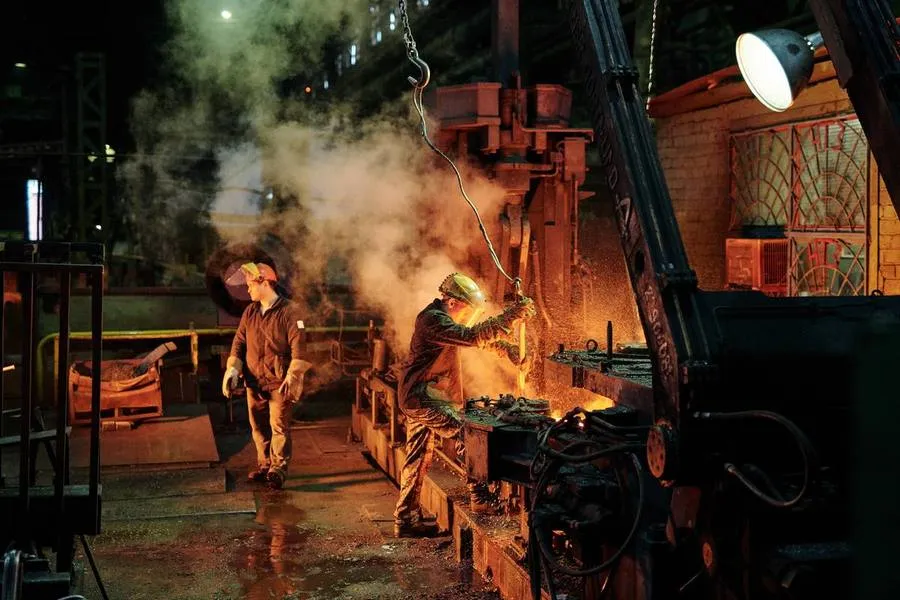 Crucible furnace for bronze and aluminum casting
Casting consists of melting a metal and pouring it into a mold with the geometry of the final part. Once solidified, it’s removed from the mold and normally undergoes finishing machining to achieve final dimensions and tolerances.
Green sand casting process
Most industrial bronze and aluminum parts are cast in green sand: a mixture of sand, clay, and water that forms the mold. It’s versatile, economical, and allows complex geometries. For high-precision parts or critical surface finish, permanent mold (metal shell) or die casting is used.
From mold to machined part
After removal from the mold, the part has extra material on all working surfaces. The next step is CNC machining to reach final dimensions with the required tolerances. The combination of casting + machining allows you to manufacture parts that would be impossible to produce by machining alone from a solid bar.
Properties of industrial bronze
Most common bronze alloys in industry
Bronze is an alloy of copper (Cu) with tin (Sn) and other elements. The most common in Mexican industry:
- SAE 65 bronze (Cu-Sn-P): phosphor bronze, excellent wear resistance and hardness. For high-load gears and bushings.
- SAE 64 bronze (Cu-Sn-Pb): leaded bronze, better lubricity, for plain bearings and bushings. Most used in sugar mills.
- Aluminum bronze (Cu-Al): higher mechanical strength than tin bronze, excellent corrosion resistance. For valves, propellers, and marine components.
- Brass (Cu-Zn): technically not bronze, but cast and machined similarly. For hydraulic fittings, connections, and decorative components.
Corrosion and wear resistance
Bronze is the material of choice when there is moisture, corrosive products, or metal-to-metal sliding under load. Its ability to retain lubricant in the porous microstructure makes it ideal for bearings working in harsh conditions. In the sugar industry, it resists the corrosive action of molasses, steam, and sugarcane juices throughout a complete harvest season.
Properties of cast aluminum
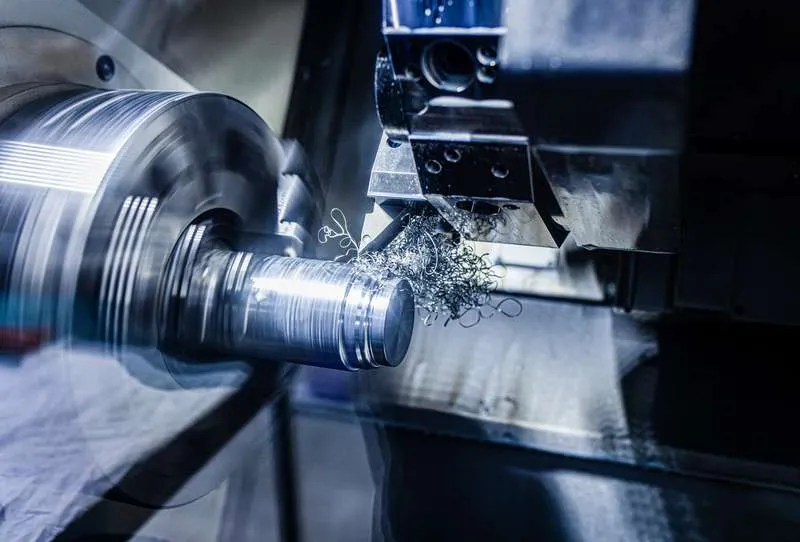 Bronze casting ready for the machining process
Aluminum alloys for casting
- Al-Si 380 (AISI 380): the most widely used die-casting alloy in the world. Good fluidity, minimal shrinkage. For housings, covers, and complex-shaped parts.
- Al-Si 356 / A356: better ductility and fatigue resistance. For wheels, structural parts, and vibration-subjected components.
- Al-Cu 206: high mechanical strength, but lower corrosion resistance. For high-load parts with moderate temperature.
Advantages of cast aluminum
Aluminum weighs approximately one-third of bronze (2.7 vs 8.8 g/cm³). This weight difference is decisive in applications where inertia or weight are critical: components for mobile equipment, transport systems, and structures where weight reduction improves energy efficiency. Additionally, aluminum conducts heat much better than bronze, making it preferred in thermal dissipators and motor housings.
Technical comparison: bronze vs aluminum in industrial applications
| Property | Bronze (SAE 64/65) | Aluminum (356/380) |
|---|---|---|
| Density (g/cm³) | 8.5–8.9 | 2.6–2.8 |
| Tensile strength (MPa) | 200–350 | 150–280 |
| Hardness (Brinell) | 60–100 HB | 50–90 HB |
| Wear resistance | Excellent | Good (with treatment) |
| Corrosion resistance | Excellent | Good (with coating) |
| Thermal conductivity (W/m·K) | 50–70 | 130–180 |
| Melting point (°C) | 850–1000 | 570–630 |
| Material cost (relative) | High | Low |
| Machinability | Good | Excellent |
Bearings, bushings, and pillow blocks: bronze or aluminum?
For plain bearings and pillow blocks, bronze is almost always the answer. The reason: bronze works against the steel shaft without wearing it, absorbs impacts and shocks, retains lubricant, and resists corrosion. Aluminum in these applications wears the shaft, has lower lubricity, and fails faster under continuous load. The only exception is when weight is critical and loads are low.
When to choose bronze and when to choose aluminum?
Use bronze when…
- There is metal-to-metal sliding (bearings, bushings, pillow blocks)
- The environment is humid, corrosive, or with aggressive products (sugar, steam, petroleum)
- High wear resistance is required during long operational cycles
- The part works in the sugar, petrochemical, or marine industry
Use aluminum when…
- Weight is a critical design factor
- Good heat dissipation is required (motor housings, radiators)
- Loads are moderate and there’s no continuous metal-metal sliding
- Material cost is determinant and the environment is not aggressive
Practical rule: if your part rotates or slides inside another steel part, choose bronze. If your part is a housing, cover, support, or lightweight structural component, evaluate aluminum first.
Costs and delivery times in industrial casting in Mexico
The complete process (casting + machining) for a standard part like a bushing or pillow block has the following typical times at TILCA:
- Simple part (bushing up to Ø150 mm): 3–5 business days
- Medium part (pillow block or cover up to 30 kg): 5–10 business days
- Large part or complex geometry (>30 kg): 10–20 business days
Times depend on workshop load. For urgent maintenance needs, check availability directly.
Frequently asked questions about bronze and aluminum casting
What is bronze casting used for in industry?
Mainly for bushings, bearings, pillow blocks, gears, and low-friction components in corrosive environments. It’s the standard material for mill pillow blocks in sugar mills.
Which is more economical: bronze or aluminum?
Aluminum costs 3 to 5 times less per kg. However, in wear applications bronze lasts much longer, which can result in lower total cost of life.
What bronze alloy is used for sugar mill pillow blocks?
SAE 64 (Cu-Sn-Pb) and SAE 65 (Cu-Sn-P) alloys are most common. They offer good lubricity, wear resistance, and tolerance to molasses and sugar vapor corrosion.