
Choosing the wrong welding process can translate into deficient joints, quality rejections, safety risks and rework costs. For an engineer or plant manager in Mexico, understanding the real differences between MIG-MAG, TIG and MMA welding is not an academic luxury: it is a technical decision that directly impacts product quality and project profitability. This guide covers the practical aspects of each process.
What is industrial welding and why does the process matter?
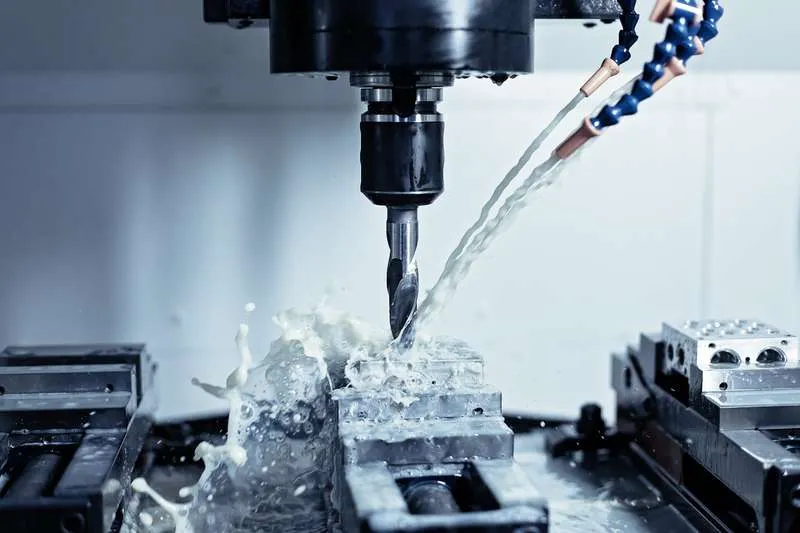 MIG-MAG welding process in a specialized shop
Welding is a process of permanently joining metallic materials by heat, pressure or both. In industrial environments, the choice of welding process determines joint strength, surface finish, production speed and operating costs.
Technical criteria for choosing a welding process
- Base material: carbon steel, stainless, aluminum, copper, titanium.
- Material thickness: thin sheet (< 3 mm), medium (3–12 mm), thick (> 12 mm).
- Welding position: flat, horizontal, vertical, overhead.
- Quality requirements: bead appearance, radiographic testing, standards (ASME, AWS).
- Required productivity: continuous welding vs. spot welds, production volume.
- Gas availability: fixed installation or field work.
The role of shielding gas in bead quality
The MIG, MAG and TIG processes require shielding gas to prevent contamination of the weld pool by atmospheric oxygen and nitrogen. Without gas shielding, the molten metal absorbs these gases, generating porosity, oxidation and embrittlement of the bead. MMA, on the other hand, uses the electrode coating as its shielding gas source, eliminating the need for an external cylinder.
MIG/MAG welding: speed and versatility in production
The difference between MIG (inert gas) and MAG (active gas)
MIG (Metal Inert Gas, also called GMAW) uses pure argon or argon-helium mixtures. Inert gases do not react with the molten metal, producing clean, high-quality beads. It is mainly used on aluminum, stainless steel and non-ferrous metals.
MAG (Metal Active Gas) uses pure CO₂ or CO₂-Ar mixtures (typically 80% Ar / 20% CO₂). CO₂ acts as a mild oxidizer, increasing arc penetration and reducing gas cost, but generating more spatter. It is the most widely used process on carbon steel and low-alloy steel.
Applications in automotive and structural manufacturing
MIG-MAG is the preferred process when high productivity is required: the continuous-wire gun allows higher deposition rates than TIG or MMA. In metal structure manufacturing, agro-industrial machinery fabrication, frames and chassis, MIG-MAG significantly reduces welding times compared to manual processes.
TIG welding: maximum precision and bead quality
 High-precision TIG welding on stainless steel
When to use TIG vs. MIG on stainless steel
TIG welding (Tungsten Inert Gas, GTAW) uses a non-consumable tungsten electrode and argon as shielding gas. Filler material is added manually with a rod. It is the slowest process but produces the highest-quality bead: no spatter, minimal heat-affected zone, aesthetic finish.
For stainless steel in the food, pharmaceutical or beverage-processing industries, TIG is mandatory: beads must be smooth, free of pores and free of surface oxide (chromium carbide) that would compromise corrosion resistance. MIG can be used on stainless steel when aesthetic finish is not a priority and higher speed is required.
TIG welding in high-demand applications
- Piping and pressure vessels (ASME IX standard).
- Stainless steel structures for the food industry (EHEDG, 3A).
- Aerospace and transportation aluminum.
- Copper and special alloys (titanium, Inconel).
- Root passes in critical pipe welds, complemented with MIG fill passes.
MMA welding: portability and field work
Advantages of MMA in corrective maintenance
MMA welding (Manual Metal Arc, SMAW or stick welding) is the most logistically versatile: it only requires a power source, electrodes and personal protection. It does not depend on a gas supply, works outdoors in wind and in difficult positions. Ideal for field repairs, emergency corrective maintenance and welding at heights or in confined spaces.
In the sugar and petrochemical industries, MMA is indispensable when performing equipment maintenance that cannot be moved to the shop. The setup speed (no gas hoses, no wire feeder) compensates for its lower deposition rate in many field situations.
Electrode types and their application in special steels
- E6013: universal electrode for carbon steel; easy striking, good appearance, thin sections.
- E7018: low hydrogen, high strength, for high-strength steels and medium-to-thick sections.
- E308L / E316L: for 304L/316L stainless steel, corrosion resistance.
- ENiCrFe-3: for dissimilar joints (carbon steel to stainless or to Inconel).
- Hardfacing electrodes: hard-surfacing electrodes to restore worn surfaces (shafts, rollers, knives).
Comparison: MIG-MAG vs. TIG vs. MMA
| Characteristic | MIG-MAG | TIG | MMA |
|---|---|---|---|
| Deposition rate | High | Low | Medium |
| Bead quality | Good | Excellent | Good |
| Aesthetic finish | Good | Excellent | Fair |
| Requires external gas | Yes | Yes | No |
| Field work | Limited | Not recommended | Ideal |
| Applicable metals | Steel, Al, Stainless | All | Steel, Stainless |
| Skill required | Medium | High | Medium |
| Operating cost | Medium | High | Low |
| Ideal thickness | 1–25 mm | 0.5–6 mm | 3–50 mm |
Which process to use by industry?
Sugar and petrochemical industries
For repairing cane conveyors, mill rollers and crusher structures, MMA is the king of the field thanks to its portability. For shop fabrication of high-strength steel components, MAG (CO₂-Ar) offers the best speed-quality balance. When working stainless steel parts that will be in contact with juices or molasses, TIG is the standard.
Industrial welding standards in Mexico
Welds on pressure vessels, industrial piping and critical structures are regulated in Mexico by standards such as:
- NOM-020-STPS: pressure vessels.
- ASME Section IX: qualification of procedures and welders.
- AWS D1.1: structural steel welding.
- NMX-B-482: welder qualification requirements in Mexico.
Practical note: at TILCA, our welders are DC-3 certified and we work with qualified welding procedures (WPS) for carbon steel, stainless steel and aluminum. We discuss the most suitable process with the client before every project.
Frequently asked questions about industrial welding processes
What is the difference between MIG and MAG welding?
MIG uses inert gases (argon, helium) that do not react with the metal; ideal for aluminum and stainless. MAG uses CO₂ or CO₂-Ar mixtures that provide greater penetration at lower cost, but more spatter; it is mainly used on carbon steel.
What is TIG welding used for?
TIG produces the highest-quality, purest bead: no spatter, clean finish, minimal heat-affected zone. It is used on stainless steel, aluminum, titanium and applications where aesthetics and corrosion resistance are critical.
When is MMA welding used?
Mainly in field maintenance and repair where no gas installation is available. Portable, economical and effective in difficult positions. The coated electrode generates its own shielding gas as it burns.
Which welding process is best for stainless steel?
For the food and pharmaceutical industries, TIG is the standard: oxide-free beads and maximum corrosion resistance. For stainless structures with lower aesthetic demands, MIG with argon + 2% O₂ is also valid.